Creosote buildup in your chimney is a serious fire hazard, responsible for an estimated 25,000 house fires in the U.S. each year. This sticky, flammable residue forms when burning wood, especially if the fire burns inefficiently or when using unseasoned wood. Even a thin layer of creosote can pose risks, with thicker deposits significantly increasing the chance of a chimney fire.
Key Takeaways:
- Burn seasoned, dry firewood with less than 20% moisture to reduce smoke and creosote formation.
- Maintain proper airflow by fully opening the damper and ensuring the fire burns hot and clean.
- Inspect and clean your chimney regularly, ideally once a year, to remove dangerous buildup.
- Watch for warning signs like tar-like residue, restricted airflow, smoke backing into your home, or strong odors.
Professional maintenance is essential for tackling stubborn creosote deposits and ensuring your chimney is safe. Regular inspections and cleanings can lower fire risks by up to 90%. Take action now to protect your home and family.
The Dangers and Necessity of Preventing Creosote Build-Up in Your Chimney
sbb-itb-5427fa3
What Is Creosote and How Does It Form?
Three Stages of Creosote Buildup in Chimneys
Creosote is a highly flammable substance that builds up as a byproduct of burning wood. It’s made up of unburned wood particles, gases, soot, tar, and various chemical compounds. Every time you light a fire, the smoke produced rises and cools, causing these substances to stick to the walls of your chimney. How quickly this buildup happens depends on factors like how efficiently the fire burns, the temperature inside the flue, and the airflow through the chimney.
Certain conditions speed up creosote formation. Fires that don’t burn hot enough or don’t get enough oxygen lead to incomplete combustion, which produces more creosote. Low flue temperatures – anything under 250°F – cause smoke to cool faster, leading to more condensation and buildup. Poor airflow also plays a role, as it creates cooler, smokier burns.
Burning unseasoned (or wet) wood makes things worse. Since this wood contains a lot of moisture, much of the fire’s energy goes into evaporating water instead of producing heat. This lowers the overall temperature, creates more smoke, and reduces the wood’s heat output by 50%–60%. All of this contributes to faster creosote buildup.
The 3 Stages of Creosote
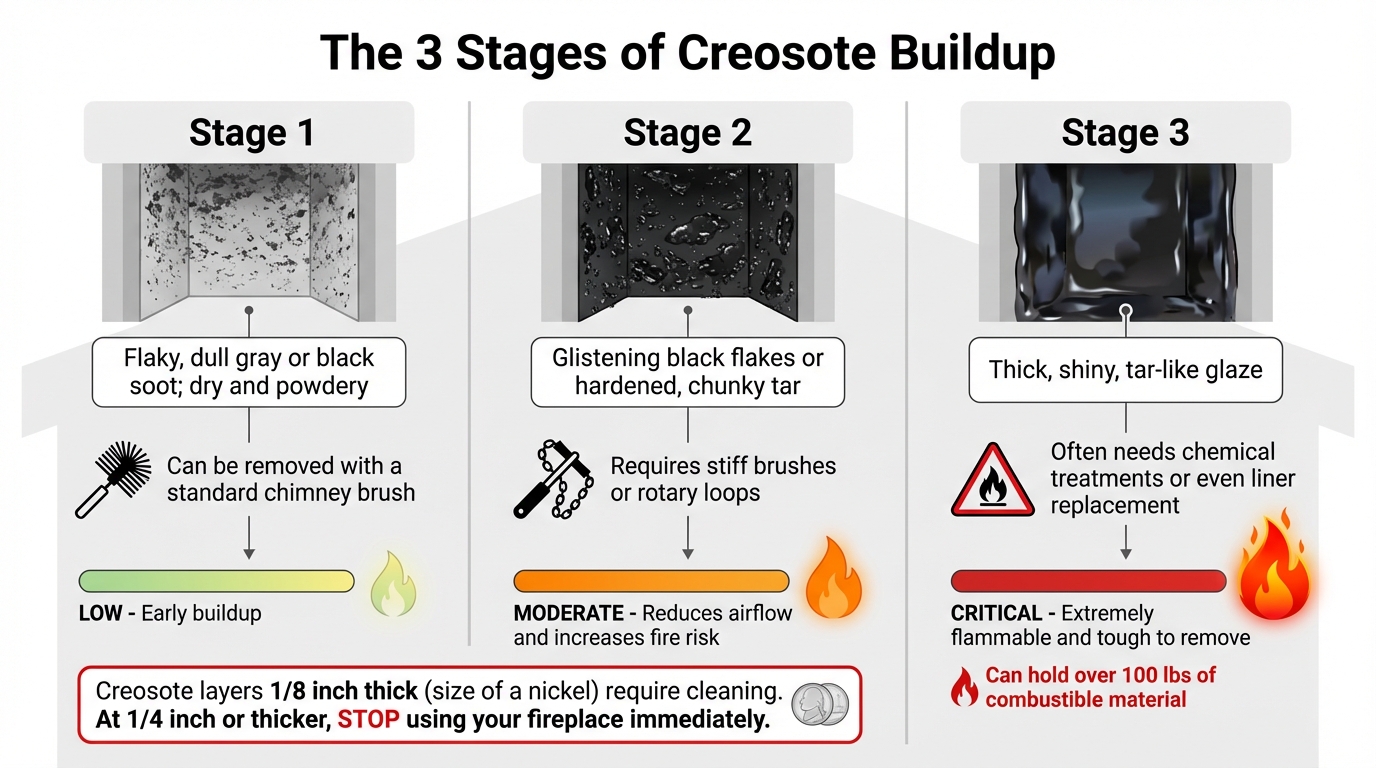
It’s important to understand how creosote develops because it accumulates in three stages, each with increasing levels of risk. Knowing these stages can help you figure out when it’s time to call in a professional for cleaning.
| Stage | Appearance & Texture | Removal Method | Danger Level |
|---|---|---|---|
| Stage 1 | Flaky, dull gray or black soot; dry and powdery | Can be removed with a standard chimney brush | Low – early buildup |
| Stage 2 | Glistening black flakes or hardened, chunky tar | Requires stiff brushes or rotary loops | Moderate – reduces airflow and increases fire risk |
| Stage 3 | Thick, shiny, tar-like glaze | Often needs chemical treatments or even liner replacement | Critical – extremely flammable and tough to remove |
Stage 1 creosote tends to form when you burn seasoned wood efficiently in a warm flue. Stage 2 shows up when airflow is restricted, often due to closed glass doors or dampers. Stage 3, the most dangerous, occurs when unseasoned wood is burned continuously in a cold flue or a chimney that’s too large. A chimney coated in Stage 3 creosote can hold over 100 pounds of highly combustible material, making it a serious fire hazard.
Warning Signs of Creosote Buildup
Spotting creosote buildup early can help you avoid the risk of a chimney fire. Knowing how creosote forms is just the first step – being able to recognize the warning signs is key to keeping your chimney safe. Below are the main indicators to watch for when assessing creosote buildup.
What to Look For
Start with a visual inspection. Grab a flashlight and examine the flue from the firebox. If you notice a shiny, tar-like coating, this points to Stage 3 creosote, which is highly dangerous. Even if the buildup looks dull and powdery, check its thickness to gauge the severity.
Perform a scratch test to measure buildup. Put on protective gear and use a fireplace poker to scratch the black surface above the damper. If the scratch reveals a matte layer and is no deeper than 1/8 inch, the buildup is minimal. However, a deeper, shiny, tar-like scratch signals heavy accumulation that requires professional cleaning. Creosote layers reaching 1/8 inch thick (about the size of a nickel) should prompt you to schedule a professional chimney inspection and cleaning. If the layer is 1/4 inch or thicker, stop using your fireplace immediately, as the risk of a chimney fire becomes significant.
Notice changes in how your fire burns. If your fire seems weak or sluggish, it could be a sign that creosote is narrowing the flue and restricting airflow. This restricted airflow might also cause smoke to back up into your home, leaving soot deposits on glass doors.
Be alert to unusual odors or sounds. A strong, unpleasant smell – similar to hot tar or burning asphalt – could indicate significant creosote buildup. These odors often intensify during humid weather or when air conditioning creates downdrafts, pushing chimney air into your living space. Loud cracking, popping, or a roaring noise resembling a jet engine might mean a chimney fire is already underway. Additionally, creosote debris around the chimney or firebox is another red flag of heavy buildup.
How to Prevent Creosote Buildup
Preventing creosote buildup starts with understanding what you burn and how you burn it. The key is to create conditions that reduce condensation and ensure complete combustion, keeping your chimney safe and free of dangerous deposits. Here’s how you can minimize creosote accumulation, starting with your choice of firewood.
Burn Seasoned, Dry Firewood
Moisture is the enemy of efficient burning. Firewood works best when its moisture content is below 20%. Burning wet or green wood leads to excessive smoke filled with unburned particles, which cool and stick to your chimney walls as creosote. Hardwoods like oak and maple are ideal because they burn hotter and last longer, while softwoods like pine or spruce contain resins that can speed up creosote buildup.
To properly season your firewood, store it off the ground with only the top covered, allowing airflow to dry it out. Firewood should season for at least six months before use. You can check if your wood is ready by striking two logs together – seasoned wood makes a hollow "clunk" sound, while wet wood produces a dull thud. For a more precise reading, use a wood moisture meter to confirm the moisture level is below 20%.
Avoid burning materials like household trash, cardboard, plastics, painted or treated wood, plywood, or ocean driftwood. These not only release harmful chemicals but also contribute to rapid creosote accumulation.
Maintain Hot, Complete Fires
Smoldering fires are a recipe for creosote. Fires that burn weakly and produce excessive smoke lead to incomplete combustion, leaving tar deposits inside your flue. To prevent this, aim to keep your fire temperatures between 250°F and 500°F – this ensures that combustion byproducts exit the chimney before they can condense.
Start your fire with clean newspaper and dry kindling to quickly reach high temperatures, rather than using large logs right away. Stack your logs with enough space between them to allow oxygen to circulate freely, creating a hotter, cleaner burn. Avoid overpacking the firebox, as this restricts airflow and encourages smoldering. If your flue is cold, warm it up first by lighting a rolled-up newspaper torch before starting your fire.
"The longer the smoke is in the flue, the more likely is it that creosote will form." – FEMA
Improve Chimney Airflow and Ventilation
Good airflow keeps smoke moving and prevents condensation. Always open your damper fully before starting a fire. In homes with tight insulation, crack open a nearby window to provide the extra oxygen needed for an efficient burn. Persistent indoor smoke can signal a serious drafting problem, which may require professional attention.
Don’t close air inlets or stove dampers prematurely, as this deprives the fire of oxygen and leads to heavy creosote production. Keeping glass doors slightly open during operation can also help maintain higher temperatures.
Why Professional Maintenance Matters
Even with proper burning habits, creosote buildup is inevitable, and some deposits are simply too stubborn for DIY methods to handle. Creosote, no matter how careful you are, will accumulate over time. While homeowners can slow this process, professional maintenance is essential to ensure complete safety. Certified chimney sweeps are equipped with specialized tools and training to tackle even the toughest deposits, like hardened Stage 2 and Stage 3 creosote – something standard brushes just can’t manage. In fact, annual professional cleaning and inspections can lower the risk of creosote-related fires by as much as 90%.
But professional maintenance isn’t just about cleaning. Certified sweeps use advanced tools like cameras and mirrors to inspect your chimney for hidden hazards – things like cracked liners, warped metal, or damaged mortar joints that could allow flames to escape into your home’s structure. They also ensure your chimney vents harmful gases, such as carbon monoxide, effectively. Without proper airflow, these gases can seep back into your living spaces, posing serious health risks.
Schedule Annual Inspections and Cleaning
Plan ahead and book your inspection early. The ideal time for a professional chimney inspection and cleaning is September or October, before the heating season kicks off. Sweeps are less busy during this time, giving you a chance to address any issues they uncover before winter sets in. If you burn more than four cords of wood each season, you might also want to schedule a mid-season checkup.
If you’ve experienced a chimney fire or notice debris falling into the firebox, don’t wait – schedule an inspection immediately. These could be signs of structural damage that only a professional can evaluate. Make sure to hire someone certified by organizations like the Chimney Safety Institute of America (CSIA) to ensure they have the required expertise and equipment. Staying proactive not only reduces fire risks but also keeps your chimney running efficiently.
Benefits of Professional Services
DIY methods can’t handle everything. While homeowners might manage to clean away Stage 1 flaky soot, more advanced creosote deposits require industrial-grade tools and chemicals that aren’t included in standard cleaning kits. Third-stage creosote, in particular, is highly combustible – about 85% – and can shrink your flue’s diameter by 30–50%, creating a dangerous fire hazard.
Professional services do more than just remove buildup. They can improve your chimney’s draw, which enhances heating efficiency and helps lower fuel costs. Plus, thorough inspections protect your property. Chimney fires caused by creosote buildup result in over $125 million in property damage every year. Investing in professional maintenance isn’t just about safety – it’s about preserving your home and saving money in the long run.
Seasonal Chimney Maintenance Schedule
Keeping up with chimney maintenance throughout the year is crucial for avoiding creosote buildup and ensuring your system operates safely. While an annual inspection is a must, the specific tasks you should focus on vary by season. Dividing maintenance into pre-season and post-season routines helps you cover all the bases without missing anything important.
Before Heating Season
Get your chimney ready for winter by following these pre-season steps. Aim to schedule a professional inspection in September or October, well before you start using your fireplace. During this inspection, check that the chimney cap is firmly in place and free of damage. Animals like birds, squirrels, and raccoons often make their homes in chimneys during the warmer months, creating blockages that can be hazardous.
Before lighting your first fire, test the chimney draft by holding a tissue near the fireplace opening. If the tissue blows inward instead of being pulled up the flue, open a window on the same floor to balance the air pressure and correct the airflow. Also, ensure the damper opens and closes smoothly. Check for creosote buildup – if it’s significant, schedule a cleaning. When it’s time to burn wood, use hardwood that has been dried for 6–12 months. Wood with a moisture content below 20% burns more efficiently and produces less creosote.
After Heating Season
Once the heating season ends, focus on these post-season tasks to keep your chimney in top shape. Start by disposing of ash from the firebox in a metal container with a lid, placed at least 3 feet away from your house. Clean the grates, andirons, and firebox walls using a nylon brush to remove soot. Don’t overlook the smoke shelf above the damper – this area tends to collect soot and creosote, which can cause strong odors during the humid summer months.
After cleaning out the ash and soot, inspect the metal parts for signs of warping and check the masonry for any cracked flue tiles. If you notice a strong creosote smell in your home during the summer, it’s likely due to high humidity and air conditioning drawing odors into your living space. While scheduling a professional cleaning can help, you can also place baking soda or kitty litter in the firebox to absorb odors until your next inspection.
Conclusion
To prevent chimney fires, stick to burning seasoned hardwood, maintain hot fires with good airflow, and always keep your damper open. While these habits help reduce buildup, professional care is necessary to tackle dangerous residues.
Between 2017 and 2019, chimneys were the source of 77% of residential heating fires – amounting to over 26,000 incidents. As FEMA aptly states: "Clean chimneys don’t catch fire". Scheduling annual inspections and cleanings removes hazardous third-stage creosote – a hardened and highly flammable substance – before it poses a threat.
Consistency in maintenance, combined with professional expertise, is your best defense against chimney fires. Adopt a seasonal routine to check your firewood, inspect your chimney, and clear out ash. Aim to book your professional inspection in September or October, giving you peace of mind before the colder months. These proactive measures protect your home from fires that can burn as hot as 2,000°F.
Safe burning practices and regular maintenance go hand in hand. Use a wood moisture meter to ensure your firewood is properly seasoned. By following these steps, you can safeguard your home from preventable chimney fires.
FAQs
How can I recognize dangerous creosote buildup in my chimney?
You can identify hazardous creosote buildup by checking for dark, tar-like stains inside your chimney, noticing a strong smoky or acrid smell, or spotting a thick layer of residue that’s more than 1/4 inch thick. If the buildup feels hard, shiny, or forms a black crust, it may signal third-stage creosote – a highly flammable substance that significantly increases the risk of a chimney fire.
To reduce this danger and ensure your chimney remains safe and efficient, regular inspections and cleanings are a must.
Why should I hire a professional chimney sweep instead of cleaning it myself?
Hiring a professional chimney sweep is a smart move to keep your fireplace safe and efficient. These experts don’t just clean your chimney – they thoroughly inspect it for hidden problems like cracks, blockages, or structural damage that you might miss if you go the DIY route. This is especially important for preventing chimney fires caused by creosote buildup.
Professionals come equipped with specialized tools, like high-temperature brushes and video inspection gear, to tackle creosote and debris safely and effectively. Plus, they can provide a detailed inspection report, which is often a requirement for home insurance policies. This extra step ensures your chimney is not only clean but also up to code, giving you confidence every time you light a fire.
Why is it harmful to burn wet or unseasoned wood in my fireplace?
Burning wet or unseasoned wood can wreak havoc on your chimney. The high moisture content in this type of wood leads to cooler, incomplete combustion. This not only creates more smoke but also releases excess creosote – a sticky, flammable substance that clings to the walls of your chimney. Over time, this buildup significantly raises the risk of chimney fires, which can be extremely dangerous.
To keep your chimney and home safe, stick to properly seasoned firewood. Seasoned wood burns hotter and cleaner, minimizing creosote buildup and making your fires safer and more efficient.