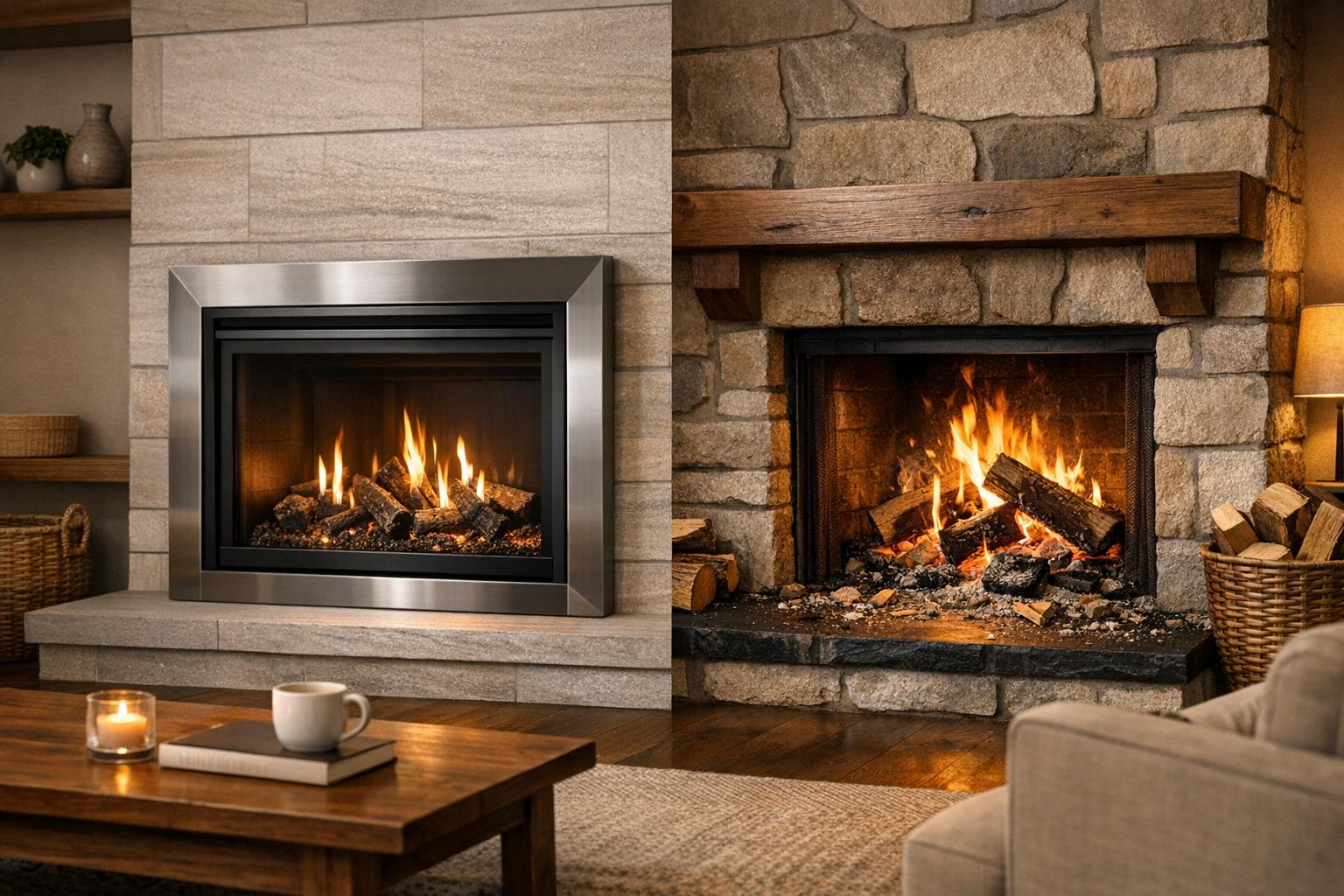
Choosing between a gas and wood fireplace? Maintenance is a key factor to consider. Here’s the breakdown:
- Wood fireplaces require regular ash removal, annual chimney sweeps, and monitoring for creosote buildup to prevent fire hazards. Costs for professional cleaning range from $130–$380.
- Gas fireplaces are easier to maintain but need annual inspections for gas leaks, carbon monoxide risks, and vent blockages. Typical service costs range from $100–$200.
Both types need yearly professional checks for safety, but wood fireplaces demand more frequent hands-on upkeep. Below is a quick comparison:
| Maintenance Factor | Wood Fireplace | Gas Fireplace |
|---|---|---|
| Cleaning Frequency | After each use, yearly | Annually |
| Safety Risks | Creosote, chimney fires | Gas leaks, CO exposure |
| Annual Cost | $130–$380 | $100–$200 |
| DIY Maintenance | High effort | Moderate effort |
Whether you prefer the rustic charm of wood or the convenience of gas, proper care ensures safety and longevity.
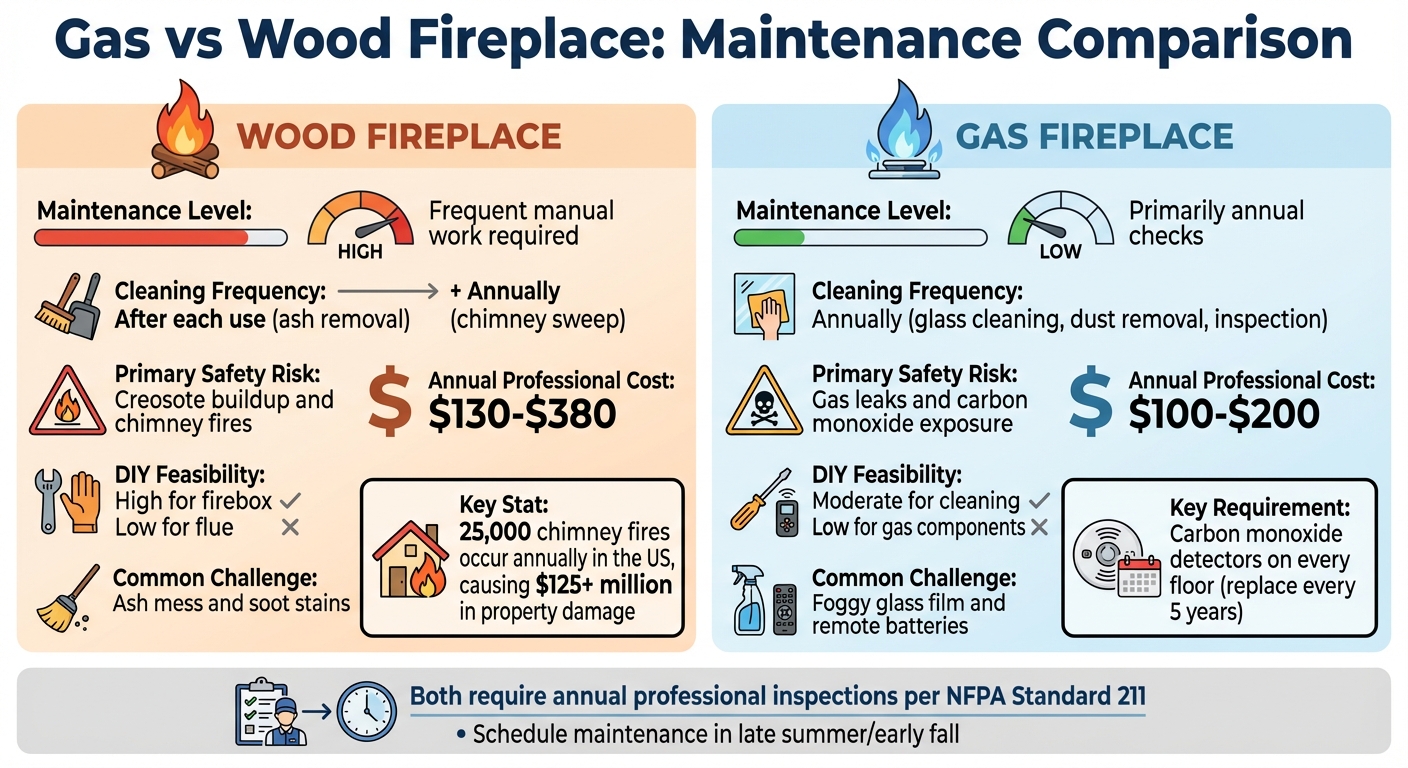
Gas vs Wood Fireplace Maintenance Comparison: Costs, Frequency, and Safety Risks
Wood Fireplace Maintenance: Creosote and Ash
Creosote Buildup and Cleaning
Creosote forms when tar vapors and wood oils condense on cooler chimney walls. This buildup is more likely if your fires lack enough oxygen, you burn wet or "green" wood, or your chimney surfaces remain too cool. Creosote is highly flammable, igniting at 451°F, and a chimney fire can quickly reach temperatures over 2,000°F in less than a minute.
Creosote develops in stages: it starts as light soot, progresses to a granular layer, thickens into a sticky tar-like film, and eventually hardens into a glassy glaze that’s tough to remove.
To check for creosote, try the scratch test. Use a flashlight and a fireplace poker to scrape the black surface above the damper. If the groove is 1/8 inch thick, it’s time to schedule a professional chimney inspection. If it’s 1/4 inch or thicker, stop using the fireplace immediately – it’s a serious fire risk. To minimize buildup, burn only seasoned hardwoods like oak or birch and keep the flue temperature above 250°F. Hiring a professional chimney sweep typically costs between $130 and $380.
Keeping creosote under control also makes ash management easier, which we’ll cover next.
Ash Removal Tips
Once creosote is managed, proper ash maintenance is key for keeping your fireplace efficient. During the heating season, leave about a 1-inch layer of ash in the firebox. This layer helps insulate the base and makes starting new fires easier. At the end of the season, remove all ash to avoid acidic moisture damage.
Before removing ash, let it cool for at least 12 hours. Always use a metal ash bucket with a tight-fitting lid – never use plastic or paper containers, as hidden embers can stay hot for days. For safety, wear heat-resistant gloves, goggles, and a respirator mask to protect yourself from fine soot particles. When cleaning, opt for a specialized ash vacuum designed to handle high temperatures rather than a standard household vacuum.
sbb-itb-5427fa3
Gas Fireplace Maintenance: Burners, Valves, and Vents
Burner and Gas Valve Maintenance
Even though gas fireplaces are low-maintenance compared to wood-burning ones, they still need regular care for burners and valves. Before starting any work, always turn off the gas valve and pilot light, and let the unit cool for at least 30 minutes.
To clean the burner and ports, use a vacuum or compressed air to remove dust, soot, and debris. If your fireplace includes decorative stones or glass, cover the vacuum nozzle with cheesecloth or a nylon net to avoid accidentally sucking up these elements. Don’t forget to check the pilot light monthly – a steady blue flame with just a small yellow tip means everything’s working correctly. If the flame flickers or turns entirely yellow, it might indicate a problem.
Gas valves and connections should be inspected for leaks, corrosion, or looseness. It’s a good idea to schedule a professional inspection annually, ideally in late summer or early fall, which typically costs between $70 and $200. If repairs are needed, they can average around $575. Finally, make sure the vents and exhaust systems are clear and securely connected.
Vent and Exhaust Inspections
Once the internal components are taken care of, shift your focus to the venting system to ensure proper safety. Check exterior vents monthly for any obstructions, like bird nests, leaves, or other debris that could block airflow. According to Blazing Embers, vents are crucial for expelling dangerous gases, but they can become clogged with grease, debris, or even bird nests.
Inspect the glass door seal to ensure it’s airtight, as this prevents harmful gases from entering your home. Use a vacuum with a soft brush attachment to clean dust and lint from airflow vents and louvers. While gas vents don’t accumulate creosote like wood-burning fireplaces, they can still get clogged with spider webs and other debris. For added peace of mind, consider installing a carbon monoxide detector near your fireplace.
Cleaning Tools: Wood vs Gas Fireplaces
Tools for Wood Fireplaces
Maintaining a wood fireplace requires sturdy tools designed to handle the intensity of live flames and the mess they leave behind. A basic set includes a poker for adjusting burning logs, tongs for safely moving wood, a shovel for scooping out ash, and a broom to sweep the hearth clean.
For chimney maintenance, specialized equipment is key to managing creosote buildup. Tools like chimney brushes (with metal or plastic bristles) and soot scrapers help remove the sticky, tar-like residue from the flue. An ash vacuum with a HEPA filter is essential for containing fine ash particles, while metal buckets provide a safe place to store hot ashes. Don’t forget protective gear – respirators or dust masks, safety goggles, work gloves, and long sleeves help shield you from harmful soot and creosote dust during the cleaning process.
Gas fireplaces, on the other hand, require a gentler touch and a completely different set of tools.
Tools for Gas Fireplaces
Cleaning a gas fireplace involves protecting its delicate components while ensuring efficient performance. A vacuum with a soft brush attachment, non-abrasive microfiber cloths, and a fireplace glass cleaner are the core tools for the job. A screwdriver is useful for accessing internal parts, and a canister of compressed air works well for clearing dust from burner orifices.
For cleaning the glass, use a specialized cleaner like Rutland to safely remove carbon deposits and the cloudy white film often found on fireplace glass. A simple 50/50 vinegar-and-water solution can handle routine cleaning, but steer clear of ammonia-based products like Windex – these can react with heat and cause irreversible clouding. For thermocouples and ignitors, fine-grit sandpaper, emery cloth, or steel wool can be used for gentle cleaning. If your fireplace features decorative stones or glass, cover the vacuum nozzle with cheesecloth to avoid accidentally sucking up these small, fragile elements.
Inspection Schedules and Professional Services
Annual Inspections for Wood Fireplaces
According to NFPA Standard 211, both wood and gas fireplaces require annual inspections to ensure they remain safe and efficient. For wood fireplaces, these yearly checks are especially important, as they help prevent the roughly 25,000 chimney fires that occur in the United States each year. These fires result in over $125 million in property damage – and the majority of them could be avoided with consistent professional maintenance.
"NFPA 211 requires chimneys to be inspected at least once every year for structural integrity, creosote deposits, and clearances." – National Fire Protection Association
Wood fireplaces demand more frequent cleaning compared to gas units. Typically, they should be cleaned after 50–70 uses or whenever creosote buildup reaches 1/8 inch. If your wood fireplace serves as a primary heat source, cleaning may be needed after burning each cord of wood. To make scheduling easier and potentially more affordable, plan inspections during the spring or summer months. These annual evaluations pave the way for routine maintenance, keeping your fireplace safe and functional.
Routine Checks for Gas Fireplaces
Gas fireplaces also fall under the annual inspection requirement, but their cleaning schedule is more flexible. Depending on how often they’re used, professional cleaning is usually necessary every 1–3 years. Inspections for gas units focus on mechanical safety, including checks for gas leaks, carbon monoxide risks, proper valve function, and ensuring vents are free from blockages like debris or animal nests.
Even if your gas fireplace is rarely used, it still needs an annual inspection to address potential hazards, such as bird or animal nests in the venting system. Additionally, it’s crucial to have functioning carbon monoxide detectors on every floor of your home, replacing them approximately every five years. To ensure your gas fireplace is ready for colder months, test it in early fall to confirm it’s operating safely and efficiently.
Gas vs Wood Maintenance Comparison Table
Comparison Table: Gas vs Wood Fireplaces
When it comes to maintenance, gas and wood fireplaces have very different needs. Wood fireplaces demand more frequent attention, such as clearing out ash after each use and scheduling annual chimney sweeps. On the other hand, gas fireplaces are less labor-intensive, requiring only an annual inspection and cleaning.
The costs reflect these differences too. Hiring a professional chimney sweep for a wood fireplace typically costs between $130 and $380, whereas servicing a gas fireplace ranges from $100 to $200. If you use your wood fireplace heavily, you might need additional professional visits, which can drive up the cost. Safety risks also vary: wood fireplaces have a higher risk of chimney fires due to creosote buildup, while gas fireplaces carry the potential hazards of gas leaks and carbon monoxide exposure.
Here’s a quick breakdown of the key maintenance differences:
| Maintenance Factor | Wood Fireplace | Gas Fireplace |
|---|---|---|
| Maintenance Level | High – frequent manual work required | Low – primarily annual checks |
| Cleaning Frequency | After each use (ash); Annually (chimney) | Annually for glass cleaning, dust removal, and inspection |
| Primary Safety Risk | Creosote buildup and chimney fires | Gas leaks and carbon monoxide |
| DIY Feasibility | High for firebox; Low for flue | Moderate for cleaning; Low for gas components |
| Annual Professional Cost | $130–$380 | $100–$200 |
| Common Challenge | Ash mess and soot stains | Foggy glass film and remote component batteries |
While some cleaning tasks, like ash removal from a wood fireplace or wiping down the glass on a gas fireplace, can be done on your own, certain jobs are best left to the experts. Chimney maintenance for wood fireplaces should always be handled by a certified professional, and any work involving gas lines or valves in a gas fireplace requires a licensed technician’s expertise. Each type of fireplace comes with its own set of responsibilities, so it’s important to understand what’s involved before making your choice.
Safety Concerns and Prevention
Preventing Chimney Fires in Wood Fireplaces
One of the biggest risks with wood-burning fireplaces is chimney fires, often caused by creosote – a flammable residue that forms when wood smoke condenses. Ashley Eldridge, Director of Education at the Chimney Safety Institute of America (CSIA), explains:
While the firebox is built with firebrick and intended for direct contact with fire, everything above the damper is designed to withstand only hot smoke and gases from the fire, not fire itself, so a chimney fire can cause serious damage.
To minimize the risk, burn only hardwood that has been seasoned for 6–12 months. You can tell wood is properly seasoned if it makes a clear, ringing sound when two logs are struck together. Keep the damper open and avoid closing glass doors while the fire is burning – this helps reduce rapid creosote buildup.
Regular maintenance is vital. A professional chimney sweep should clean your chimney when creosote buildup reaches 1/8 inch. FEMA emphasizes:
Clean chimneys don’t catch fire. Make sure a professional chimney sweep inspects your solid fuel venting system annually, and sweeps and repairs it whenever needed.
Adding a chimney cap with a screen is another smart step. It prevents debris and animals from entering while also acting as a spark arrester. These precautions not only keep your home safe but also help your fireplace last longer.
Avoiding Gas Leaks in Gas Fireplaces
Gas fireplaces require a different kind of attention, with the focus on preventing gas leaks and carbon monoxide hazards. Always rely on a licensed professional for any gas line installation or repairs. To check for leaks, apply a soapy solution to gas lines, valves, and ports; if bubbles appear, there’s a leak.
If you smell gas, act immediately: ventilate the area, evacuate everyone, and contact your gas company from a safe location. Avoid using light switches or electronics, as they could ignite a spark.
Install carbon monoxide detectors on every floor of your home, and test them at least twice a year. These detectors should typically be replaced every five years. For added safety, consider installing an oxygen-depletion sensor, which automatically shuts off the gas if oxygen levels drop or carbon monoxide levels rise. During your annual inspection, have a professional ensure the glass door gaskets are airtight to prevent combustion gases from leaking into your home. These steps not only safeguard your home but also help maintain the efficiency and longevity of your gas fireplace.
Gas vs Wood Fireplaces – Which Should You Choose? with Godby Hearth & Home
Conclusion
As we’ve explored, gas and wood fireplaces come with their own unique maintenance needs. Wood fireplaces require a more hands-on approach, involving tasks like clearing out ash after a few uses, storing and hauling seasoned firewood, and scheduling yearly chimney sweeps to remove creosote buildup – a substance that poses a fire risk if left unchecked. Gas fireplaces, on the other hand, are less labor-intensive but still need periodic technical attention, such as cleaning the glass, vacuuming dust from burners, and ensuring gas valves are functioning correctly.
Regardless of the type, scheduling an annual professional inspection is non-negotiable. These inspections are crucial for identifying potential issues, preventing carbon monoxide leaks, ensuring proper venting, and tackling minor problems before they escalate into costly repairs. Neglecting this step is one of the main causes of home heating fires, making regular upkeep a matter of safety as much as efficiency.
To stay ahead of the curve, aim to schedule maintenance during late summer or early fall – before the temperatures drop and technicians’ schedules fill up. This ensures your fireplace is ready to go when you need it most. Proper care not only enhances safety but also helps extend the lifespan of your fireplace while keeping long-term costs in check. Whether you’re dealing with creosote and ash or gas lines and pilot lights, consistent upkeep is the key to protecting your home and your investment.
While the maintenance requirements differ, neither type of fireplace should be overlooked. Understanding what your specific fireplace needs – and committing to that care – can make all the difference in safety, efficiency, and long-term performance.
FAQs
What are the main safety concerns with wood and gas fireplaces, and how can they be addressed?
Wood fireplaces bring certain risks that require attention. For instance, nearby objects can ignite if placed too close. Make sure to keep anything flammable at least 3 feet away, and never burn items like paper, which can cause unpredictable flames. Another concern is creosote buildup in chimneys, which is a common cause of chimney fires. To reduce this risk, schedule annual professional inspections and cleanings. Additionally, to prevent sparks or embers from escaping, always use a glass or metal screen. When disposing of ashes, ensure they are completely cooled, then store them in a metal container with a lid, placed at least 10 feet away from your home.
Gas fireplaces, while more convenient and low-maintenance, come with their own set of risks, such as gas leaks or carbon monoxide (CO) exposure. Issues like faulty installation or blocked vents can allow harmful gases to seep into your home. To stay safe, have your gas fireplace inspected by a professional on a regular basis, check for leaks, and ensure proper venting and clearance. These precautions are key to keeping your home and family safe from potential dangers.
How often should I maintain my wood or gas fireplace?
For wood-burning fireplaces, make it a habit to clean out the ash and wipe down the firebox after each use. It’s also important to schedule a chimney inspection and cleaning at least once a year, preferably before the colder months set in. This helps identify issues like creosote buildup, cracks, or blockages, ensuring your fireplace remains safe and works efficiently.
Gas fireplaces, on the other hand, need less frequent cleaning, but regular professional servicing is still a must. If you use your gas fireplace often, have a licensed technician inspect and clean it annually. For less frequent use, every two years should suffice. In between professional visits, you can keep the glass clean and remove any dust buildup. Routine maintenance keeps your fireplace running smoothly and safely, regardless of the type.
What are the maintenance costs for a wood fireplace compared to a gas fireplace?
The upkeep costs for wood fireplaces and gas fireplaces differ due to the distinct care each type demands. Wood fireplaces often come with expenses like chimney sweeping, ash removal, and purchasing tools such as chimney brushes. In contrast, gas fireplaces typically involve periodic inspections of components like gas valves, burners, and pilot lights, which may require professional servicing.
Although the exact costs depend on factors like your location and how often the fireplace is used, wood fireplaces generally need more frequent cleaning and maintenance, especially with heavy use. Gas fireplaces are less demanding in terms of upkeep but still require regular checks to ensure they operate safely and efficiently. To get a clearer idea of potential costs, it’s a good idea to consult a professional who can evaluate your specific situation.