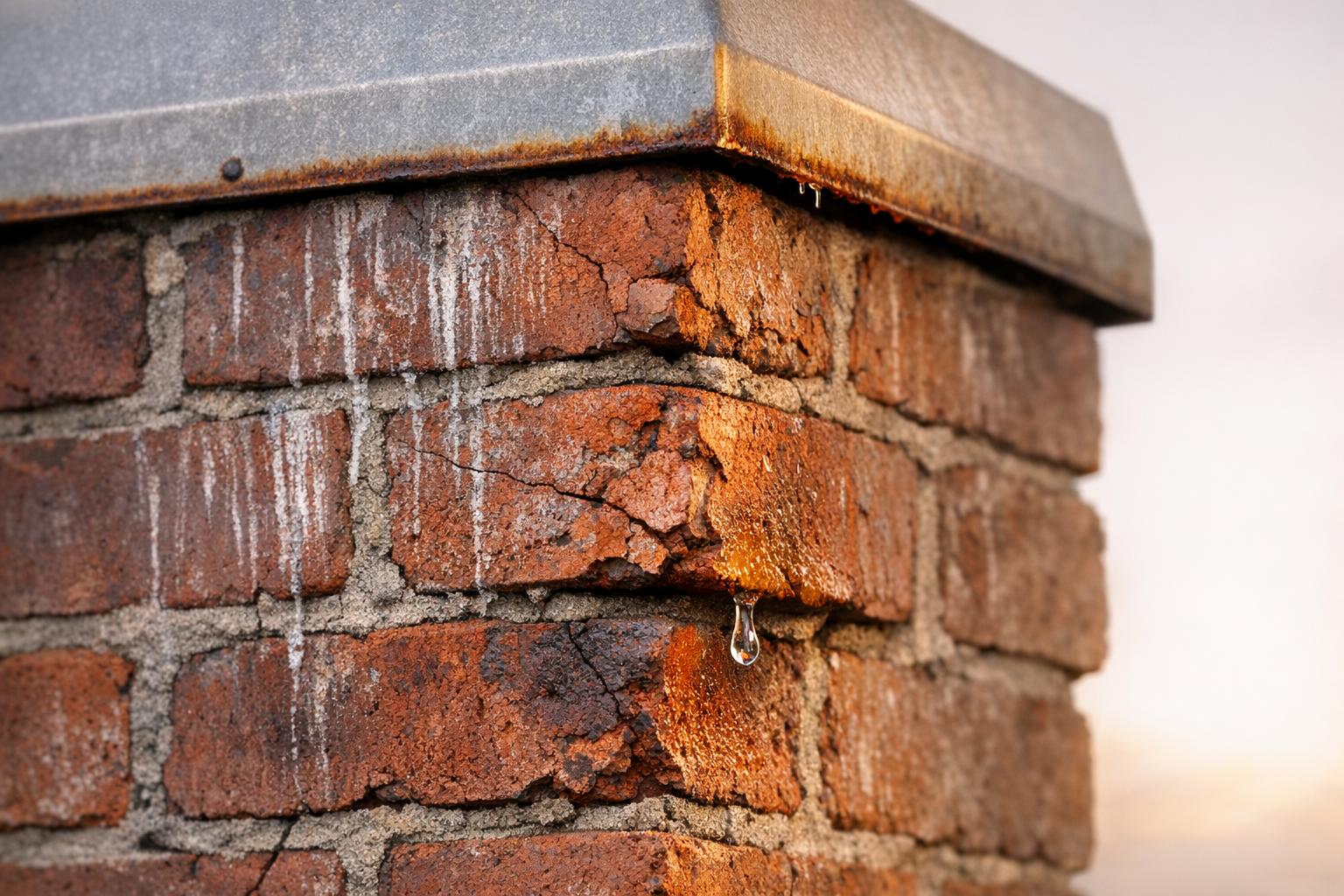
Water damage is the biggest threat to your chimney’s safety and longevity. Left unchecked, it can lead to structural issues, mold growth, and even fire hazards. Here’s how to spot the signs early and protect your home:
- Exterior Signs: Look for white stains (efflorescence), flaking bricks, cracked mortar, or rust on metal parts like caps or flashing.
- Interior Signs: Watch for yellow or brown stains near your fireplace, peeling paint, or musty odors. Water pooling in the firebox or rust on the damper is also a red flag.
- Common Causes: Damaged flashing, missing caps, cracked crowns, or worn masonry allow water to seep in, worsening the damage over time.
Regular inspections are key to catching these problems early. If you notice any of these signs, act quickly to prevent costly repairs and safety risks.
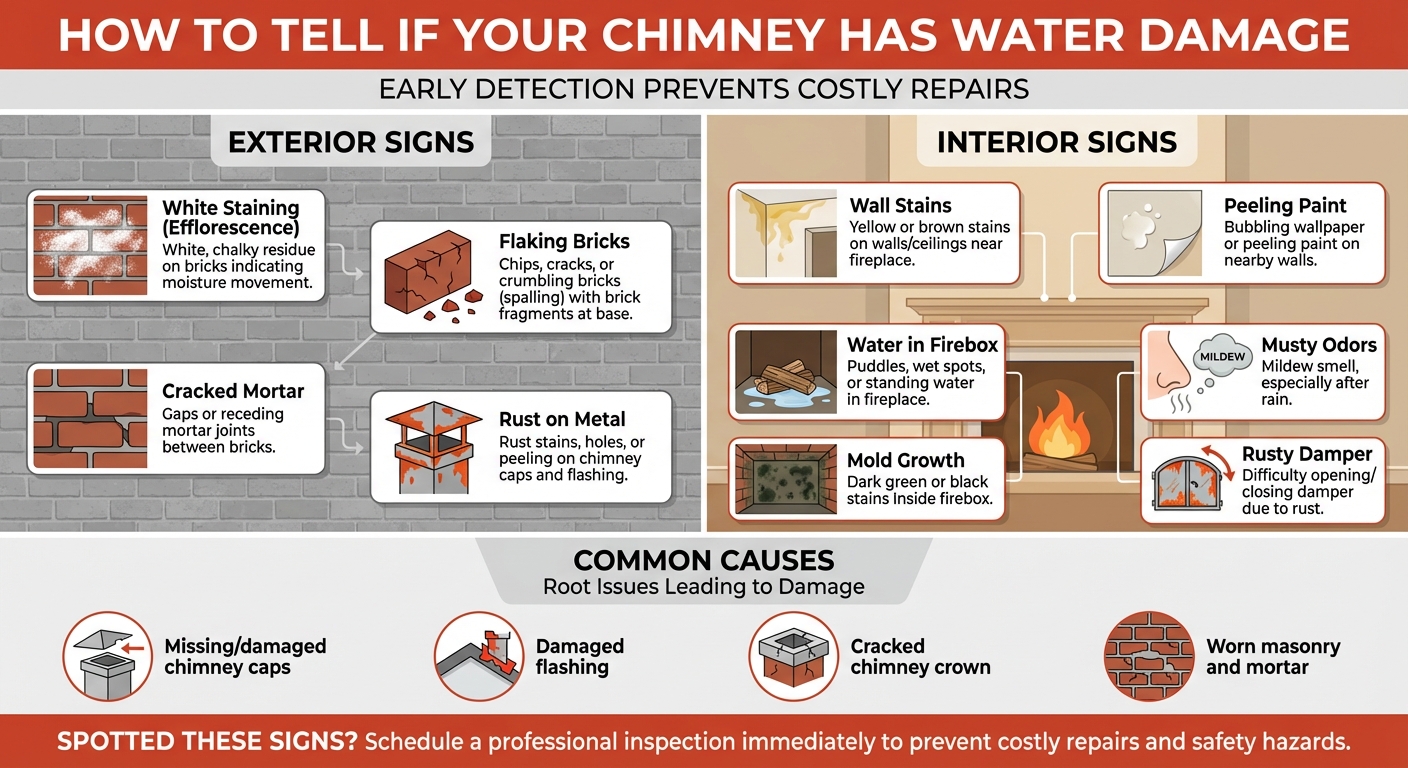
Signs of Chimney Water Damage: Exterior and Interior Warning Signs
How to Check Your Chimney for Leaks
What to Look for on the Outside of Your Chimney
Taking a closer look at your chimney’s exterior can help you catch early signs of water damage before they turn into costly repairs. Key indicators to watch for include white deposits, flaking bricks, and rust on metal parts. Let’s break these down.
White Staining and Powdery Deposits
Efflorescence, the white, chalky residue that sometimes appears on bricks, is a telltale sign of moisture moving through the masonry. This happens when water seeps into the bricks, dissolves natural salts, and then evaporates, leaving salt crystals behind on the surface.
"Efflorescence – the white, chalky residue on bricks – is a sign of moisture movement through masonry. While not harmful on its own, it indicates that water is passing through your chimney, which could lead to more serious damage over time." – Mad Hatter Services
Painting over these deposits is not a good idea – it traps moisture inside the bricks, which can worsen the damage. Instead, check for efflorescence after heavy rain or snow. If you notice it, it’s time to call in a professional to inspect for leaks. Left unchecked, this moisture can lead to spalling or even mold growth.
Flaking Bricks and Cracked Mortar
When bricks start to flake, chip, or crumble, it’s a clear sign of spalling. This occurs when water gets trapped in the porous bricks, freezes, and then expands by about 9%. You might spot piles of brick fragments or crumbled mortar at the base of your chimney – both signs that the damage is advancing.
Mortar joints are particularly susceptible to damage because they bear the brunt of weather exposure. Cracks, gaps, or receding mortar are all indicators that water has started to penetrate the structure. Addressing these issues early with tuckpointing can restore the chimney’s stability and prevent larger, more expensive problems down the road.
Rust on Metal Parts
It’s not just the masonry that’s at risk – metal components like chimney caps and flashing are also vulnerable to water damage. Rust stains on your chimney’s exterior are a sign that these parts have been exposed to moisture, which has compromised their protective seal.
"A chimney cap is one of the most important parts of your chimney. It will prevent rain from entering your chimney, which will protect it and your fireplace from damage." – Doctor Flue
Look closely at your chimney cap and flashing for rust spots, holes, or peeling sealant. If you notice any of these issues, act quickly to repair or replace the damaged components. This can help ward off leaks and prevent water from causing further harm to your chimney.
Signs of Water Damage Inside Your Home
Once you’ve checked the exterior of your chimney, it’s time to turn your attention indoors. Water damage isn’t always obvious on the outside – sometimes the first signs appear inside your home, especially near the fireplace. For instance, yellow or brown stains on walls or ceilings close to the chimney are often mistaken for roof leaks. These stains, however, might indicate that water has seeped through the chimney structure. You might also spot peeling paint or bubbling wallpaper on nearby walls, which suggests water has already penetrated drywall or plaster layers.
Take a close look at the firebox for any signs of moisture. This could include wet spots, puddles, or even standing water. Water streaks running down the back of the fireplace or pooling at its base are also red flags. If you hear a dripping sound inside the chimney but can’t see any water, it might mean that water is hitting the metal damper or firebox, potentially leading to rust over time.
Stains and Moisture Around the Fireplace
After a heavy rainstorm, inspect the area surrounding your fireplace. Dark green or black stains inside the firebox could indicate mold or mildew growth, which means water has been present long enough for these organisms to develop. Stains near the ceiling often point to flashing issues, while those closer to the floor might be caused by damaged mortar.
"Water stains on the walls or ceiling near your fireplace can be a significant warning sign. These stains usually appear yellow or brown and are often mistaken for roof leaks."
- Mad Hatter Services
You might also notice condensation or a faint "fog" inside the fireplace when lighting a fire for the first time, a sign of high moisture levels in the flue. Additionally, if the damper becomes harder to open or close, rust from prolonged water exposure could be the culprit. These issues not only risk structural damage but can also impact the air quality in your home. Visible signs like these often pave the way for less obvious indicators, such as unusual smells.
Musty Smells and Mold
A persistent musty smell, similar to mildew, is often one of the earliest signs of moisture trapped in hidden areas like the smoke shelf. These odors tend to become more noticeable after heavy rain or snow. If you detect a foul smell following rainfall, it might be the result of water mixing with creosote deposits inside the flue.
"If the fireplace smells of mildew or dirty laundry, it is a sure sign that water exists in the system, probably in hidden spaces such as the smoke shelf."
Mold growth inside the chimney system can release spores into your home’s air, potentially affecting both air quality and your health. If you notice these odors, try opening the damper to improve airflow and help dry out the system. However, don’t delay in scheduling a professional inspection – moisture trapped in the masonry or flue will only lead to more extensive damage over time.
sbb-itb-5427fa3
Why Water Gets Into Chimneys
Understanding how water sneaks into your chimney is key to stopping damage before it gets out of hand. Most chimney issues stem from water intrusion. By identifying weak spots, you can take the necessary steps to protect your home.
Water often finds its way into chimneys through damaged or missing components. These gaps allow rain, snow, and ice to seep in. Once inside, moisture can exploit existing cracks or porous masonry. As temperatures drop, the water freezes and expands, making the cracks worse and speeding up the deterioration process. Let’s break down the main entry points for water.
Damaged Flashing and Missing Chimney Caps
A missing or damaged chimney cap leaves your flue exposed to the elements, making it easy for rain, snow, or ice to get inside. This not only increases creosote buildup but also leads to rust on metal parts like the damper. If you hear dripping sounds after a storm or notice water pooling in your fireplace, a faulty or absent cap might be to blame.
Flashing, which seals the gap where your chimney meets the roofline, is another common culprit. Over time, exposure to sunlight can crack the caulking, and the metal itself may rust or separate. This allows water to seep behind the flashing, potentially causing leaks in your attic, walls, or ceilings.
"Your flashing protects one of the most vulnerable spots for water leaks."
- Mark Stoner, Ashbusters
When replacing a chimney cap, opt for stainless steel or copper instead of painted black metal. These materials resist rust and require less upkeep. For flashing repairs, it’s a good idea to hire a chimney specialist. They have the expertise to handle the custom sizing and sealing needed for this critical area.
Cracked Crown and Worn Masonry
In addition to issues with caps and flashing, the chimney crown and masonry can also let water in.
The chimney crown, a concrete or masonry slab at the top of the chimney, is designed to direct water away from the flue. However, older homes often used basic mortar mixes instead of more durable concrete blends, making the crown prone to cracking within a few years. Even tiny cracks can allow moisture to seep in and cause damage.
"Older homes that use common mortar mix for chimney crowns often only last a few years before cracking. All it takes is one small crack for moisture to begin wearing away and entering your chimney."
- Doctor Flue
Mortar joints between bricks also deteriorate over time as they absorb moisture and face weather exposure. These gaps let water penetrate deep into the chimney. When the trapped moisture freezes, it expands, making cracks worse and accelerating decay. If left unchecked, this can weaken the chimney’s structure.
Small crown cracks can often be sealed with a flexible elastomeric coating to stop further damage. If the mortar is crumbling but the bricks are still in good shape, tuckpointing can restore the chimney’s strength.
How to Check Your Chimney and When to Get Help
Now that we’ve covered visible signs of chimney issues, let’s dive into how you can assess the situation yourself and when it’s time to bring in the pros.
Basic Inspection You Can Do Yourself
Start with a simple inspection using binoculars for the exterior and a flashlight for the interior. Look for telltale signs like white deposits, cracks, or rust, which often signal water damage. You can also test for leaks by using a garden hose. Spray water at different levels of your chimney in 15-minute intervals and check inside for any leaks – this can help you locate the exact entry point. If you notice the damper is hard to open or close, it might be warped or rusted due to prolonged exposure to moisture.
While these steps can uncover obvious problems, some issues may remain hidden, making professional help essential.
Why Choose 1 Chimney Services for Professional Inspections

If your inspection uncovers persistent or serious damage, it’s time to call in the experts. While DIY checks are helpful, they can’t reveal everything. 1 Chimney Services uses advanced tools, like specialized cameras, to detect internal liner damage and hidden mold – problems you won’t spot from the ground. Their certified team serves the Seattle-Tacoma area, where chimneys endure nearly 40 inches of rain each year, making professional inspections especially critical.
Be on the lookout for warning signs like musty odors or a "damp campfire" smell after rain – this could mean water is mixing with creosote or encouraging mold growth. Other red flags include water pooling in your firebox, crumbling mortar with loose brick fragments, or rust on metal parts like the damper. 1 Chimney Services provides detailed inspection reports with actionable solutions, not just a list of problems. And if a roofer’s repairs haven’t stopped a leak, their expertise in flashing and masonry waterproofing can address the root cause.
Conclusion
Early detection and quick action are key when it comes to preventing costly repairs and serious safety risks caused by water damage. In fact, water is the leading cause of chimney deterioration, even more than creosote buildup, aging, or chimney fires.
Signs like white staining, rust, and musty odors aren’t just surface-level concerns – they’re red flags indicating that water damage is advancing. Moisture doesn’t just weaken your chimney structurally; it also creates the perfect environment for mold growth and increases fire risks by encouraging creosote buildup in the flue. If left unchecked, a damaged chimney liner could even expose your home to dangerous carbon monoxide. And let’s not forget how freezing water can wreak havoc on already fragile masonry.
Understanding what causes these issues – like damaged flashing, cracked crowns, or missing chimney caps – empowers you to take action before the damage worsens. For example, installing a chimney cap is a cost-effective way to keep out rain, debris, and even animals. Additionally, professional waterproofing treatments, which are designed to allow internal moisture to escape while protecting the exterior, offer another layer of defense for your chimney’s masonry.
While DIY checks can help you identify surface-level problems, hidden damage often requires professional expertise. That’s where we come in. At 1 Chimney Services, our certified technicians serve the Seattle-Tacoma area, using advanced tools to uncover internal liner damage and hidden mold. In a region known for its rain, regular professional inspections are a must to keep your home and family safe.
Take these insights to heart and schedule your chimney inspection today. It’s an investment in your home, your safety, and your peace of mind.
FAQs
What can I do to protect my chimney from water damage?
To keep your chimney safe from water damage, consistent upkeep is essential. Start by making sure your chimney is well-protected against moisture. This involves fixing any cracked or missing mortar, sealing damaged bricks or masonry, and applying a waterproof sealant. Adding a chimney cap is another smart move to block rainwater from entering the flue.
You should also check the chimney crown for any cracks or wear and verify that the flashing around the chimney is secure and properly sealed to redirect water. Regular inspections by a professional can help spot early signs of trouble, like cracks or leaks, before they escalate into bigger, more expensive problems. Taking these steps can help you avoid structural damage, mold issues, and costly repairs down the line.
What are the early signs of water damage in a chimney?
Some early indicators of water damage in your chimney include discoloration on the bricks or mortar, cracks, spalling (where bricks flake or crumble), and white stains called efflorescence. You might also detect damp or musty smells or notice water stains on walls or ceilings near the chimney.
If you notice any of these signs, it’s crucial to act quickly to avoid more extensive damage. Common causes of water intrusion include faulty flashing, a damaged chimney cap, or deteriorating mortar joints. Regular inspections and timely repairs can go a long way in safeguarding your chimney and home from expensive water damage.
How do I know when to call a professional for a chimney inspection?
If you spot water stains, musty smells, cracked bricks, missing parts, or efflorescence (that white, powdery residue on the surface), it’s time to call in a professional for a chimney inspection. These are often warning signs of water damage, which, if ignored, can lead to bigger structural problems.
Even if your chimney seems fine, it’s smart to have it inspected if it hasn’t been checked in over a year. This becomes even more important after severe weather or if you suspect any damage. A professional can uncover hidden issues and help you avoid expensive repairs later on.